Compound Quality
A Purity Percentage Is Peak Area On A Chromatogram. Here Is What That Number Can And Cannot See.
99% is a measurement, not an adjective. It comes from one specific instrument, run one specific way. Understand what the machine is looking at and you understand exactly where the number stops being useful.
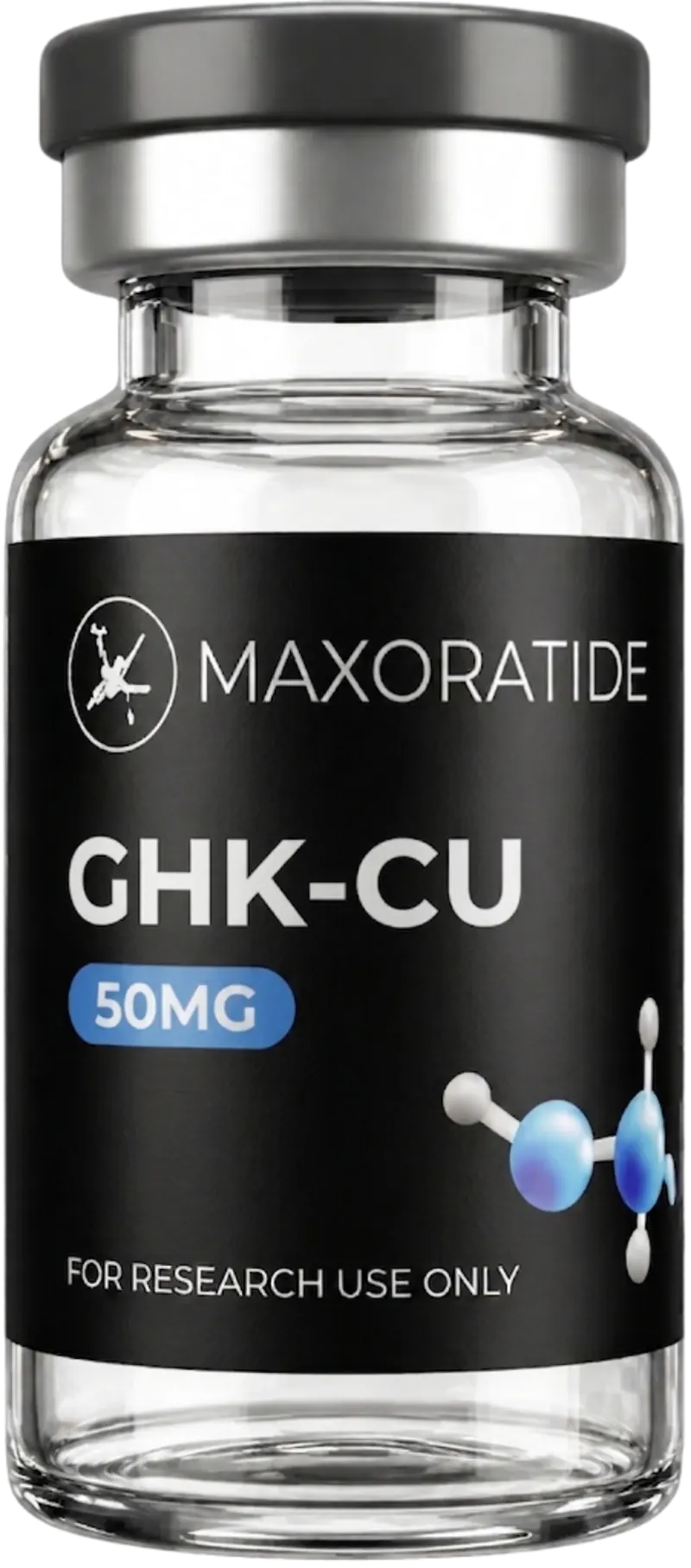 See it in the catalog →
Almost every listing in this category prints a purity figure. Very few explain where it comes from, which means very few readers can tell a rigorous number from a decorative one.
So here is the actual procedure, in plain language.
A sample of the compound is dissolved and pushed through a chromatography column. Different molecules travel through at different speeds, so they come out separated. A detector on the far end watches what emerges, usually reading ultraviolet absorbance in the 210 to 220 nanometre range, which is where these bonds absorb.
The output is a chart of peaks. The intended molecule makes one peak. Everything else makes its own.
Purity is the area of the target peak divided by the total area of all the peaks. That is the whole calculation. A result of 99% means the target peak accounts for 99% of the detected area.
Purity documented at or above 99%, on every compound.
Third party tested, with a Certificate of Analysis provided for every product in the catalog.
Browse the research catalog →1The percentage is a share of what the detector saw
Read that definition again, because the important word is "detected".
The number is a ratio of areas on a chromatogram. It is a share of the things that made a peak. Anything that does not absorb in that wavelength range, or does not come off the column at all, contributes nothing to the denominator.
It is not a share of the powder in the vial. It is a share of the signal.
Purity describes the active fraction. It says nothing about anything outside it.
2Three things a purity number cannot tell you
This is the useful part. A high purity result is silent on all three of the following.
Method note. HPLC purity is integrated from peak area, typically at 210 to 220nm. Identity is confirmed by mass spectrometry. Net content is determined separately. Sources: Bachem analytical quality control guidance; PMC10338602, reference standards for synthetic therapeutics. Accessed 12 September 2026.
Identity. The chromatogram sees a peak. It does not know what the label says. A vial of the wrong compound, cleanly made, returns a high purity figure for the wrong molecule. Only mass spectrometry connects the peak to a name.
Quantity. Purity is a ratio and ratios do not count things. A container can be 99% pure and hold less material than the label claims, because counterions and absorbed moisture take up weight without lowering a purity figure.
Everything else in the container. Residual solvents, salts and moisture are largely invisible to the method that produces the purity number.
One instrument, one question. A supplier reporting only purity has answered a third of what matters.
 Browse the research catalog →
3Why 99% and 98% are further apart than they look
One percentage point sounds like rounding. On a chromatogram it is a doubling.
A 99% result means 1% of the detected area is something other than the target. A 98% result means 2%. The impurity fraction is twice the size.
And those impurities are not random dust. In synthetic production they are usually closely related sequences: a chain missing one amino acid, a chain with one extra, a partially modified variant. Structurally similar, which is exactly why they are the hardest ones to separate out.
Compare the impurity fraction, not the purity fraction. 1% and 2% is a doubling, and the language hides it.
4What a complete document actually contains
A certificate worth reading covers identity, purity and content as three separate lines, each with its own method named, and it belongs to a specific batch.
Structure shown is the standard format for a certificate of this type. The real documents are published per batch on the catalog.
Independent analysis is conducted for every compound batch.
Testing confirms compound identity and quality parameters. Documentation is maintained for traceability.
Browse the research catalog → Browse the research catalog →
5The five second version
If you only do one thing before ordering, do this.
- Count the lines on the certificate. One line is a claim. Three or more is a document.
- Check each line names a method. HPLC, mass spectrometry. A result without a method is a sentence, not a measurement.
- Check the batch reference. It should match what is shipping to you.
- Check who signed it. A third party laboratory, not the seller.
- Convert the purity to an impurity figure. 99% means 1%. That is the number you are actually comparing.
| On the document | Maxoratide | Typical supplier |
|---|---|---|
| Purity reported | At or above 99% | Stated on the listing only |
| Identity confirmation | Compound identity verified | Often absent |
| Who tested it | Third party laboratory | In-house or unstated |
| Scope of testing | Every compound batch | One batch, once |
| Access to the document | Public COA Library | Request and wait |
Read the method, not just the number.
Every compound third party tested, documented per batch, with free shipping on orders over $200.
Browse the research catalog →
Comments
Nobody had ever explained to me that the percentage is peak area. I assumed it was a share of the powder.
That was the line that reframed it for me too. Share of the signal, not share of the vial.
The 99 versus 98 point is a good one. Framed as impurity it is double, framed as purity it sounds like nothing.
Started counting lines on certificates after reading something similar. Most suppliers I checked print exactly one.
Worth adding that a result without a named method is basically unverifiable. You cannot check a sentence.
Exactly. Method name and lab name or it is marketing copy in a serif font.