Compound Quality
You Paid For 5 Milligrams. A Purity Number Cannot Tell You Whether You Got Them.
Purity and quantity are two different tests. A container can pass one and stay completely silent on the other. Most certificates in this category only print the first one, and the gap is where your money goes.
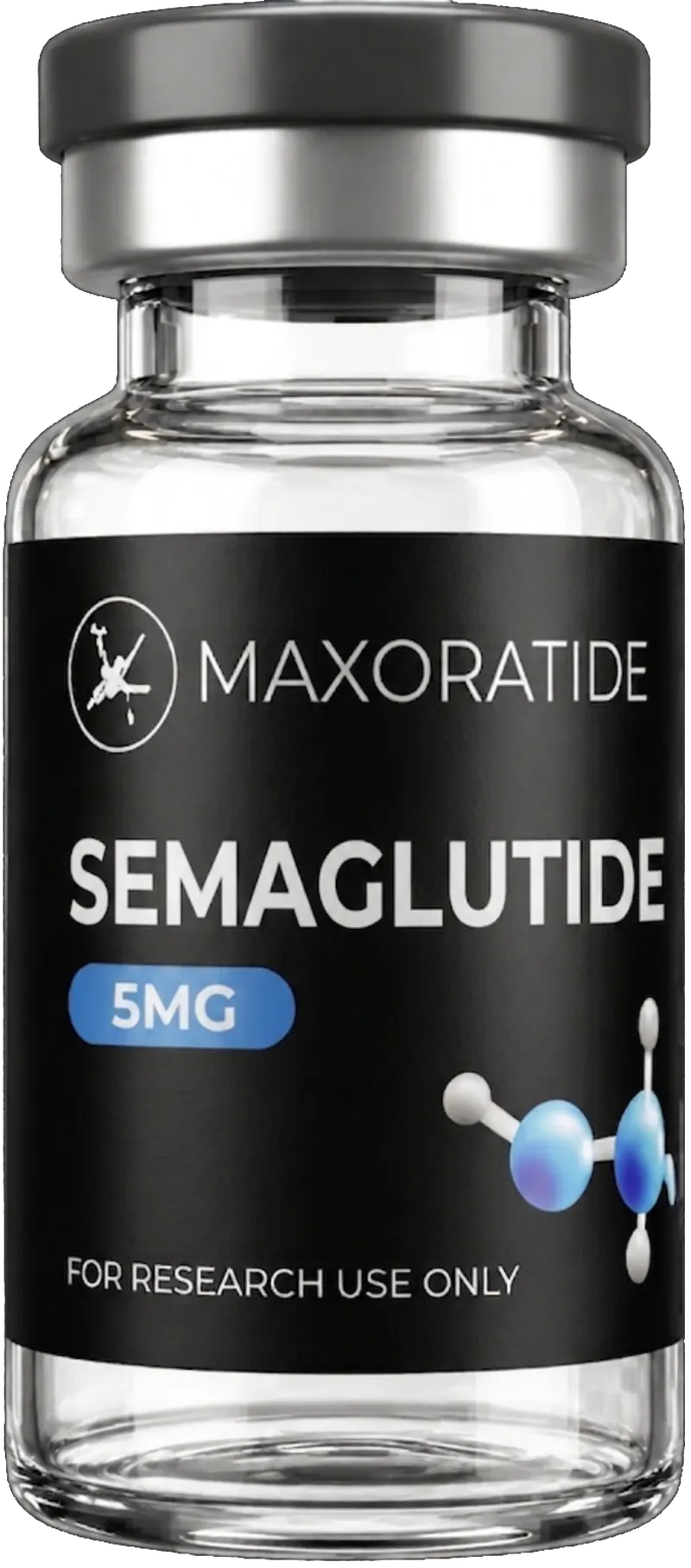 See it in the catalog →
Here is the assumption almost everyone makes, and it is completely reasonable.
The label says 5mg. The certificate says 99% pure. So the container holds five milligrams of active material, and 99% of that material is the right structure.
That is not what those two numbers mean when you put them side by side.
Purity is a ratio. It answers one question only: of the active material in this container, what percentage of it is the intended structure? It is a share of that fraction. It is not a measurement of how much of it is present.
Net content is an amount. It answers the other question: of the total powder in this container, how much of it is actually the material?
A container can be 99% pure and hold meaningfully less material than the label claims. Both things can be true on the same day, about the same container. Only one of them tends to get printed.
A Certificate of Analysis is provided for every Maxoratide product.
Independent laboratory analysis, conducted for every compound batch, available before you order.
Browse the research catalog →1A percentage cannot describe an amount
Think about a glass of orange juice. You can say the juice is 99% pure, meaning almost nothing in it is anything other than orange juice.
That tells you nothing about whether the glass is full.
These containers work in exactly the same way. Purity describes the contents. It does not count them.
Purity says what it is. Net content says how much. They are separate tests and separate lines on a document.
2The rest of the weight is real, it is just not the material
Synthetic material comes off the production line with things attached. Two in particular.
Counterions. Residual salts left over from purification, usually trifluoroacetate or acetate. They are bound to the material and they weigh something.
Water. Lyophilized powder is hygroscopic. It pulls moisture out of the air, and it does so faster once a vial has been opened in a humid room.
Neither of these lowers a purity figure, because purity is only looking at the active fraction and ignoring everything outside it. But both take up weight inside the container.
Which is why the industry guidance is blunt about it: material can be 100% pure and still have a net content well below 100%, and that is more likely the more basic amino acids the sequence contains.
Sources. Bachem analytical quality control guidance. Iris Biotech technical note on net content and purity. PMC10338602, reference standards for synthetic therapeutics. Accessed 12 September 2026.
Weight in the container and material in the container are two different measurements.
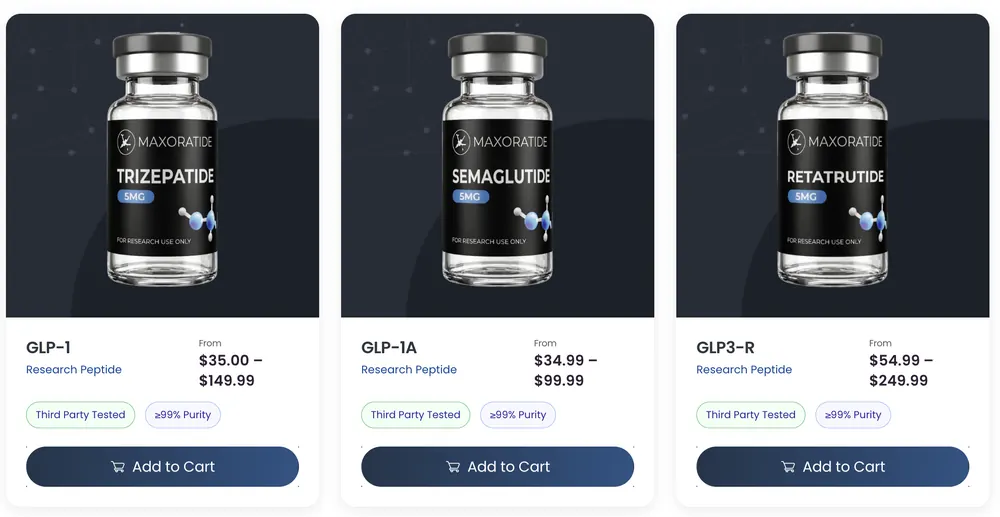 Browse the research catalog →
3What that does to your maths
This is where it stops being academic.
Say the net content of a container is around 80%. You reconstitute it using the label claim, because the label claim is the only number you were given.
Every concentration you calculate from that point is overstated by roughly a fifth. Nothing looks wrong. There is no error message. The numbers are simply off by a consistent amount you cannot see.
Multiply that across a batch of containers and the gap between what you paid for and what you received is not a rounding error.
Method note. Purity is typically integrated from HPLC peak area at 210 to 220nm. Identity is confirmed by mass spectrometry. Net content is determined separately, by amino acid analysis or UV spectrophotometry. Three methods, three results.
One number cannot do the work of three. A certificate printing a single percentage is printing a third of the picture.
4Why the content number is so often missing
Because it costs more to produce. Purity comes off a standard analytical run. Net content requires an additional quantitative method, and somebody has to commission it and pay for it.
A supplier who never orders that test is not hiding anything. They simply do not know the answer either.
Neither do you. That is the actual problem.
A missing number is not evidence of a bad batch. It is the absence of evidence, which is the thing you are paying to avoid.
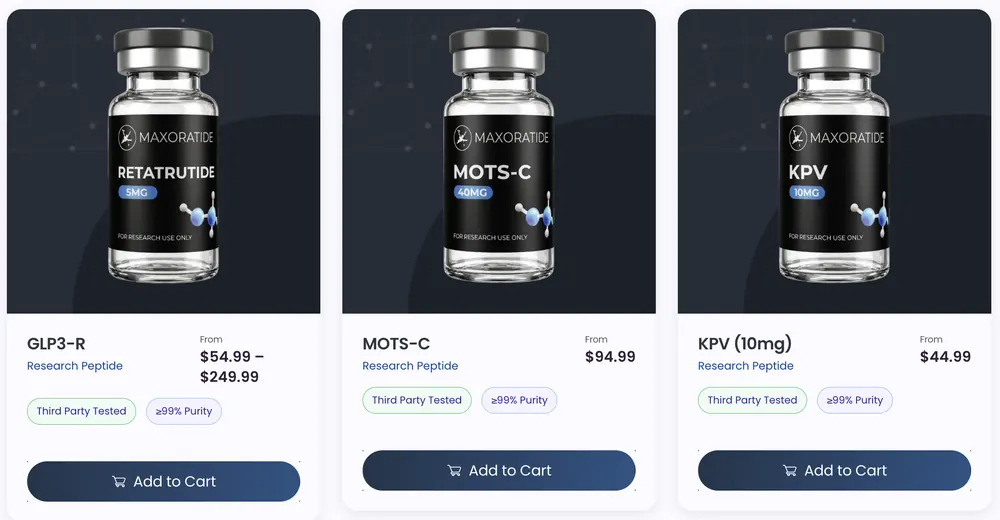 Browse the research catalog →
5Four lines to look for, in about a minute
Open the certificate for the product you are considering. Do not read all of it. Look for four things.
- An identity line. Mass spectrometry, confirming the contents match the label.
- A purity figure. HPLC, reported as a percentage.
- A content or net content line. Either a milligram figure or a statement that it meets the label claim. If it is absent, the test was not run.
- A laboratory name and a date. Signed by the lab, not by the seller.
Four checks. Under a minute. It is the fastest way there is to separate suppliers in this category.
| On the certificate | Maxoratide | Typical supplier |
|---|---|---|
| Purity figure | At or above 99% | Claimed on the listing |
| Independent testing | Third party laboratory | In-house or unstated |
| Document availability | Provided for every product | Emailed on request |
| Batch traceability | Per batch, documented | Product level, reused |
| Storage before dispatch | Monitored -86°C | Unstated |
Read the document before you pay for the vial.
Independent laboratory analysis is conducted for every batch, and the documentation is maintained for traceability.
Browse the research catalog →
Comments
The orange juice line made it click for me. Pure and full are two completely different claims and I had been treating them as one.
Pulled up four certificates I had saved. Every single one had a purity percentage. Not one had a content line.
That matches what I found. Once you know to look for it the absence is obvious.
The point about counterions and moisture is the bit nobody explains. It is not contamination, it is just weight that is not the material.
Comparing on price alone stopped making sense to me after reading this. Cheaper per milligram of what, exactly.
Exactly the conclusion I came to. The per-mg price is only comparable if both vials documented the mg.